martes, 5 de noviembre de 2019
Pop Art
En esta ocasión, tuvimos que realizar una presentación acerca del movimiento artístico nacido en el siglo XX: Pop Art. En la misma debimos incluir sus principales características y exponentes e incluir a su vez, nuestros propios trabajos hechos con la técnica del Pop Art.

Una visita a ArteBA
Para la materia arte, luego de haber estado recorriendo ArteBA, una feria de arte la cual se realiza todos los años en el predio de La Rural, debimos realizar una presentación en la cual se puedan observar varios de los trabajos exhibidos por diferentes artistas y mencionar sus características
El arte algunos cuantos de años atrás...
Para la materia arte, debimos realizar una línea de tiempo en donde se destaquen los principales acontecimientos artísticos desde finales del siglo XIX hasta finales del XX. El trabajo fue hecho a través de la aplicación visme.
Made with Visme Infographic Maker
miércoles, 3 de julio de 2019
El gato Adolfo y su pandilla
Durante las clases de literatura estuvimos trabajando y analizando alegorías. Por definición ,una alegoría como figura literaria es "un recurso retórico que representa una metáfora ampliada. Consiste en dejar de lado el sentido denotativo de la palabra y poner en práctica el sentido figurado de la misma, o sea, representa una idea o concepto a través de imágenes alusivas o metafóricas, dando a entender algo diferente a lo que se está expresando.". En otras palabras, la alegoría es una recurso el cual se basa en el significado oculto de las palabras. Es una narración con un mensaje aparente pero que en realidad esconde un mensaje paralelo distinto. Normalmente los relatos alegóricos cuentan historias sencillas sobre individuos y animales pero en el fondo se trata de una reflexión sobre ideas abstractas.
Ya habiendo trabajado el concepto de alegoría, la profesora nos propuso que en grupos creáramos una alegoría de lo que nosotros quisiéramos. El trabajo fue realizado por: Florencia Torino, Pilar lopez Spada, Dolores Mergel, Emilia Hernan, Manuel Busquets, Juana Bonnemezon y Olivia Converti. Este es nuestro resultado:
Lograron comprender la gran metáfora detrás de la narración?
Lo que nosotros quisimos retratar dentro de esta narración fue como el antisemitismo, el anticomunismo y la discriminación hacia los homosexuales, mujeres, afroamericanos, ancianos y personas con capacidades diferentes jugó un papel sumamente importante en el pensamiento de Adolf Hitler, máximo dirigente de la Alemania Nazim, desde que fuera nombrado canciller en 1933 y la ideología que este impuso durante mas de 10 años.
En el cuento se puede observar como el gato Adolfo, figura representativa de Hitler, se impone a toda una comunidad de animales (cucarachas, tortugas, vacas, caballos, ratas, peces, conejos, lagartijas y pájaros) los cuales a pesar ser diferentes podían convivir en armonía. Infundiendo terror y pánico, el gato Adolfo logro despojar de la comunidad a todos aquellos animales que le generaban una amenaza.
Cada animal de la comunidad representa un grupo de personas las cuales Hitler, atacó, encarceló y/o asesinó despiadadamente: los caballos simbolizan a los afroamericanos, las vacas las personas con sobrepeso, los pájaros los comunistas, las tortugas los ancianos , las ratas los judíos, los peces los homosexuales , los conejos las mujeres , los insectos los pobres y las lagartijas las personas con capacidades diferentes.
Cada animal de la comunidad representa un grupo de personas las cuales Hitler, atacó, encarceló y/o asesinó despiadadamente: los caballos simbolizan a los afroamericanos, las vacas las personas con sobrepeso, los pájaros los comunistas, las tortugas los ancianos , las ratas los judíos, los peces los homosexuales , los conejos las mujeres , los insectos los pobres y las lagartijas las personas con capacidades diferentes.
sábado, 29 de junio de 2019
“Découverte de la culture française” Liberté, égalité, fraternité
Dans la classe de français nous travaillions avec la Révolution Française. Nous avons enquêté sur le contexte historique et les célébrations qui se déroulent en France tous les 14 juillet. Avec les informations recueillies,nous avons dû écrire un texte et le présenter oralement en classe.
J'ai travaillé avec Juana Bonnemezon et Alan Araya
Voici une compilation de photos de la fête pour accompagner le texte
J'ai travaillé avec Juana Bonnemezon et Alan Araya
En 1789, la France était gouvernée par la monarchie absolue commandée par Louis XVI. Ce système politique en France, il a crée un grand malaise au sein de la population, par les inégalités sociales constatées et les privilèges obtenus par quelques uns.
La prise de la Bastille (prison fortifiée au cœur de Paris), le 14 juillet 1789, est la première intervention du peuple parisien dans le déroulement de la Révolution française. L'intervention populaire met provisoirement fin aux tentatives du roi Louis XVI de reprendre le pouvoir absolu qu'il a perdu en juin de cette meme année.
En suite, le 14 Juillet est la fête nationale de la République française. C'est un jour férié en France. Elle a été instituée par la loi Raspail du 6 juillet 1880, pour commémorer la prise de la Bastille du 14 juillet 1789, ainsi que la Fête de la Fédération de 1790, symbole de l'union de la Nation.
C'est un jour où il est célébré d’intervention du peuple français. Il rejoint donc des événements anciens des temps médiévaux et modernes comme éléments construisant la lutte contre l’Ancien régime.
La journée s’organise autour de deux éléments principaux, le défilé militaire et l’ensemble des festivités populaires.
Défilé militaire
Le 14 juillet a lieu un défilé des troupes sur l’avenue des Champs-Élysées de Paris, dont le départ a généralement lieu à 10 heures du matin, juste après le passage de la patrouille de France et la revue des différents corps armés par le Président de la France. D’autres défilés ou cérémonies militaires sont également organisés dans la plupart des grandes villes françaises. À Lyon, le défilé a lieu traditionnellement le 13 juillet.
Les Feux D'artifice
Ces spectacles nocturnes ont lieu autour d’endroits dégagés des villes, tels que les esplanades, les parcs ou les cours d’eau. Les feux d’artifice coûtent cher, surtout quand ils sont grandioses. De fait, de nombreuses municipalités n’ont pas les moyens humains et financiers de les organiser. Plusieurs villes organisent leurs feux d’artifice la veille de l’après-midi, le 13 juillet, si des feux d’artifice plus grands sont organisés le 14 juillet dans une ville voisine. C’est le cas de nombreuses municipalités adjacentes à la capitale.
Des danses populaires
De nombreuses danses sont organisées dans presque toutes les villes du pays. Les plus populaires sont les danses des pompiers. Le bal a souvent lieu le 13 juillet, veille de la fête, ce qui permet d’aller au travail le 15 juillet au matin.
Il y a trois types principaux de danses : le groupe traditionnel ou fanfare (appelé gang dans le sud du pays), la danse de musette, qui était tombée en désuétude entre les années 1970 et 2010, et enfin les plus fréquentes, les danses organisées par des orchestres itinérants spécialisés dans les fêtes de village.
Comment ça fette?
Dans de certains villages, la fête nationale est célébrée en fanfare dès la fin de la matinée, comme ici par exemple. Mais de nombreux villages ne disposent pas de fanfare et les festivités ne commencent alors que le soir. Sur la grande place du village sont dressées de grandes tables autour desquelles les habitants se réunissent pour dîner tous ensemble avant de participer au bal du 14 juillet. Enfants, parents, grands-parents pourront danser sur la variété française d’hier à aujourd’hui.
Les bals ont beaucoup changé et se sont modernisés, mais il y a toujours la nostalgie des bals de nos grands-parents et reviennent alors souvent les chansons d’antan, les chansons du bal musette.
La musette est une danse : une valse, un tango ou un paso sur un rythme lent. À l’origine, on dansait au son de la musette, puis de la cornemuse et enfin de l’accordéon. Ce dernier instrument de musique est celui auquel on pense quand on imagine un bal musette. Voici la chanson qui, pour moi, représente vraiment le bal musette !
Dans les grandes villes, la journée du 14 juillet commence par un défilé militaire. À Paris, pour le défilé le plus important, tous les corps armés sont représentés et chaque troupe parade les unes après les autres sous l’œil du Président de la République et de ses Ministres. Le défilé commence souvent par la parade aérienne de la Patrouille de France, s’ensuit le défilé au sol qui se termine toujours avec la Légion Étrangère pour une question de rythme. En effet, la Légion étrangère a le pas le plus lent.
Le soir, vous pouvez participer au célèbre Bal des Pompiers. L’origine de cette tradition n’est pas claire, je vous laisse découvrir les deux hypothèses existantes ici.
Villages ou villes, si les lieux le permettent des feux d’artifice y sont tirés.
Voici une compilation de photos de la fête pour accompagner le texte
sábado, 11 de mayo de 2019
Dead Poets Society
With Thinking Skills we have been working with a project about Education. Since the beginning of the year, we have been analyzing this issue through many ways. We had watched a documentary called "On the Way to School", we had worked with presentations, reports and texts about it. In order to be able to deal with this issue from another perspective, we were asked to watch different movies dealing with this topic. In my case, I worked with Juana Bonnemezon and we had to watch "Dead Poets Society". Then, we had to prepare a presentation that should include the answers to some questions given about the movie and some topics, related to the film, that we had chosen to discuss.
miércoles, 13 de marzo de 2019
¿Todos los problemas tienen solución?
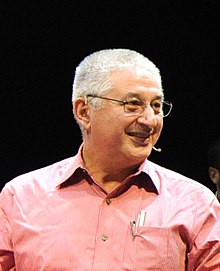
Adrián Paenza es un periodista, matemático y profesor de matemáticas Argentino por la Facultad de Ciencias Exactas y Naturales (UBA) también conductor de su propio programa educativo de TV transmitido por canal encuentro “Alterados por pi”
En la clase de Proyecto de Investigación vimos “El placer de tener un problema no resuelto en la cabeza”, un charla TED en la cual Adrián Paenza habla sobre una variedad de temas, todos relacionados y entrelazados entre sí. Sus planteos abarcan desde lo que significa tener poder de conocimiento y a su vez ejercer ese poder sobre otras personas hasta el rol fundamental de la escuela como agente socializador, de los problemas que se le propone analizar a los estudiantes en las escuelas y hace su gran diferenciación sobre los que se plantea la ciencia y da un mensaje también muy fundamental a todas las personas: no debemos callarnos nada, si uno no sabe la solución a un problema no hay que desalentarse sino animarse a poder decir que uno no sabe la respuesta a esa pregunta por mas que la pensó por mucho tiempo.
En primer lugar, lo que habla y da a entender Adrián Paenza es de cómo las personas se abusan del poder de conocimiento que ellas mismas poseen sobre otras personas. Da ejemplos de cómo nos reímos cuando otra persona se confunde al hablar, cuando no sabe una palabra o cuando simplemente no entiende lo que le estamos diciendo. Generalmente nosotros nos tendemos a reir de ese desconocimiento del otro, nos posicionamos entonces en un lugar de más poder. Sin embargo algo que Paenza dice que es importante destacar es que si a nosotros nos preguntaran si nos reiriamos del otro si se confunde, automáticamente respondemos que no por respeto a la otro persona. Todos sabemos que esta mal reirse de la persona que se confunde o que no sabe algo, sin embargo en el momento que sucede lo hacemos y ya, dejamos de lado ese respeto que conscientemente le tenemos al otro.
En segundo lugar, también trata el gran tema de la charla qué son los problemas. Para la mayoría de nosotros, existe una solución a cada problema (por eso lo celebre frase “no te hagas problema, todo se soluciona o todo tiene solución”). No obstante el deja claro desde su lugar de científico que hay ciertos problemas que no pueden ser resueltos. Para dar ejemplos concretos, él hace una diferencia entre los problemas planteados por la escuela y los problemas que se plantea la ciencia. En la escuela a los chicos se la dan problemas que ellos mismos saben que tienen solución, y que esa solución la tienen ya sea los profesores o los libros. Entonces ellos están contenidos, aunque no sepan la respuesta saben que la hay, por más de que no puedan responder una pregunta en el examen saben que aunque no recuerden cual es la respuesta, la solucion esta, existe. Por lo contrario, los científicos que se plantean problemas saben que puede ser una posibilidad que partiendo una pregunta no lleguen a ninguna conclusión y que por ende, deban volver sobre sus pasos para retomar otro camino que los lleve a resolver el problema. Así pueden estar meses, años hasta que finalmente encuentran la solución (o no). Entonces recién en ese momento los científicos publican la respuesta a su problema, aunque sin detallar todos los caminos erróneos que siguieron, todas las pistas que los llevaron a soluciones incorrectas.
A pesar de que Adrián Paenza habla sobre la escuela y dice que allí a los alumnos se les plantean problemas con soluciones definidas y que se nos dan respuestas a preguntas que todavía no nos hicimos, habla a su vez sobre lo que nos aporta el colegio como agente socializador. Él dice que además de aportarnos valores tales como la solidaridad y de proveernos de una estructura, en el colegio uno aprende a "frustrarse". En su discurso el trata de alentar a las personas a decir en voz alta que no saben algo, no hay ningún problema en, como dice él, mostrarse falibles, en decir “no entiendo” o “no me sale”. No debemos sentirnos avergonzados si no sabemos la respuesta a algo, sino atrevernos a decirlo.
sábado, 15 de septiembre de 2018
"Room", a breathtaking movie
In ELT, we had been working with Unit 4 of the Close-Up book: "Lights, Camera, Action". We were asked to write a review based on the following assignment: "An international magazine regularly features film reviews written by its readers. You decide to contribute to the column. Write a review of a film you have seen, saying why you did or did not enjoy it and whether or not you would recommend it to others." In my case, i decided to talk about the movie "Room", directed by Lenny Abrahamson.
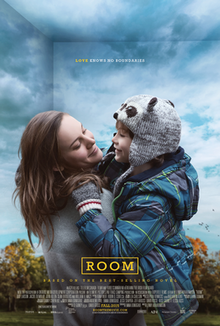 With the stellar performances of Brie Larson and the youthful Jacob Tremblay, this tale portrays the life of a woman kidnapped for many years by a man and with whom she has a son as a result of his sexual abuse.
One of the best films I’ve watched and that was nominated to an Oscar is the movie “Room".
With the stellar performances of Brie Larson and the youthful Jacob Tremblay, this tale portrays the life of a woman kidnapped for many years by a man and with whom she has a son as a result of his sexual abuse.
To begin with, the thing I liked most about the actor’s performance. I truly don't have enough words to describe it. What is most impressive is Jacob Tremblay acting. He had to play a tough character, a little young man that had never been in contact with the outside, and that her mother( interpreted by Brie Larson) had invented him a whole imaginary world so as to make him feel comfortable. Brie Larson performance is also remarkable, she even won an Oscar later for her way of characterizing this unfortunate girl who was kidnapped by a man when she was an adolescent.
The scenery of the movie is another thing that makes it really special. It creates a whole vivid environment that makes the audience feel they are inside that little shed with the mother and the boy. The staging truly conveys the idea of confinement, despair and hopelessness.
If you ever get a chance to watch it, you should give it a miss! Trust me when I tell you that you will
enjoy it as I did.
viernes, 14 de septiembre de 2018
The impact of the Internet
In the ELT class, we were asked to write an essay about the internet, its importance and its most common uses. We also had to mention which use is more significant for us and explain why.
Here is my essay:
Internet these days has become the most used tool. Its popularity among children, teenangers, adults and even the old ones has turned it in an almost indispensable element in our lives.
On the one hand, the Internet allow us to communicate with great ease with our friends,relatives and other people even if they are thousand of kilometres away.
It is incredible how it gives us the chance to keep in touch with people that maybe,due to the distance, we never would have communicated in our lives. Moreover, it is worth mentioning that Internet has created like a sort of "worldwide cobweb" that connects people of different countries, nationalities and languages. Despite their remarkable differences, thanks to the Internet, they are capable of talking to each other and not only by message but face to face too!
On the other hand, the Internet is used in most cases as a study tool. Students do not have to go to the library anymore to fetch books in order to complete a school activity or to get specific information about a certain topic. Nowadays, with just "one click" we have at our disposal millions of online-books, thousands of biographies of different people and access to anything we want to know.
As regards the reason which I consider most important, I would say that it is the ease in which the Internet let us keep in touch with people all around the world. I consider this since having this opportunity is something so interesting and at the same time rewarding, for a person to be able to see the face or hearing the voice of someone that is far away and that he/she misses.
To conclude, the Internet offers us a vast variety of opportunities that includes buying and selling online, communicating with other people and also being used as a worldwide tool by most students.
Internet these days has become the most used tool. Its popularity among children, teenangers, adults and even the old ones has turned it in an almost indispensable element in our lives.
On the one hand, the Internet allow us to communicate with great ease with our friends,relatives and other people even if they are thousand of kilometres away.
It is incredible how it gives us the chance to keep in touch with people that maybe,due to the distance, we never would have communicated in our lives. Moreover, it is worth mentioning that Internet has created like a sort of "worldwide cobweb" that connects people of different countries, nationalities and languages. Despite their remarkable differences, thanks to the Internet, they are capable of talking to each other and not only by message but face to face too!
On the other hand, the Internet is used in most cases as a study tool. Students do not have to go to the library anymore to fetch books in order to complete a school activity or to get specific information about a certain topic. Nowadays, with just "one click" we have at our disposal millions of online-books, thousands of biographies of different people and access to anything we want to know.
As regards the reason which I consider most important, I would say that it is the ease in which the Internet let us keep in touch with people all around the world. I consider this since having this opportunity is something so interesting and at the same time rewarding, for a person to be able to see the face or hearing the voice of someone that is far away and that he/she misses.
To conclude, the Internet offers us a vast variety of opportunities that includes buying and selling online, communicating with other people and also being used as a worldwide tool by most students.
miércoles, 20 de junio de 2018
Day 9: The Cardiff Castle
The Cardiff Castle
By: Juana Bonnemzon and Olivia Converti
By: Juana Bonnemzon and Olivia Converti


The war time shelters in the Cardiff Castle
Where are they located inside the castle?
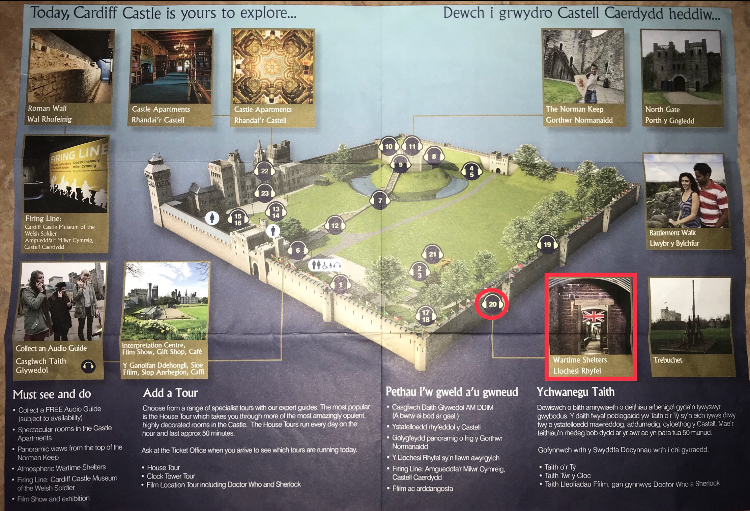
Few people realise that within the walls of the Castle are tunnels – tunnels which came into their own as air-raid shelters during the Second World War. It was estimated that more than 1800 people could take shelter within the walls and when the sirens sounded, people who lived and worked in the city would rush to the shelters. Special ramps were built so that people could gain access into the walls quickly. Within the walls there were dormitories with bunks, kitchens, toilets and first aid posts.
Entering the shelters!!!
On the outbreak of World War in 1939, Britain prepared for air raids, and Cardiff Corporation aproached Lord Bute, owner of the castle, asking if he would allow the strong outer walls of the site to be used as bomb shelters. Bute agreed, and these tunnels were divided off into eight large shelters, allowing them to accommodate hundreds of people The exterior walls were broken through, and long wooden ramps gave quick access during an emergency, Inside, civilians sometimes slept in the cold and damp shelters, which also containes an air raid warden’s post, a small canteen and a sleep bay.
Picture of the frame which contains this information

Walking through the spooky corridors of the War time shelters
Selfie with a kitchen


Some posters sticked on the walls of the shelters. They encoured people to stay inside them in
order to stay safe

order to stay safe


Reaching the top
The view from the top.


On the photo above we can see how we exit the shelter.

viernes, 11 de mayo de 2018
Presidencias Liberales
En la clase de historia, estuvimos trabajando la totalidad del período de las presidencias liberales, entre los años 1862-1880. Luego tuvimos que realizar una presentación con los temas vistos y presentarlo oralmente. Trabaje con: Manuel Busquets, Juana Bonnemezón, Emilia Hernán.
jueves, 26 de abril de 2018
TP Les Misérables
Écrit par: Manuel Busquets, Emilia Hernán, Olivia Converti et Juana Bonnemezón en classe de français
Les Misérables c’est un oeuvre du célèbre écrivain Victor Hugo. L’auteur décrit la vie a Paris dans la révolution française. Le personnage principal, Jean Valjean est un forçat qui est été condamné pour voler un pain. Dans la prison, il a été harcelé pour Javert, un police. Il a condamné pour dix neuf ans. Après s'être échappé de prison, Jean Valjean se réfugie dans un couvent. Là, il a essayé de voler au l'évêque Myriel des choses de valeur et quand la police il l'a arrêté, le prêtre il le défend malgré en disant que il a donné ces choses pour vendre. Des années plus tard, Jean Valjean s’est transformé au Maire. Il a eu une usine où Fantine a travaillé. Après qu'elle a rejeté, Jean Valjean a donné de l’aide pour sa fille parce que Fantine a été une mère célibataire et elle n'a eu d'argent. Quand Fantine est morte, Jean Valjean prend soin de Cosette. Ils se sont réfugié dans un couvent parce que Javert les a découvert. Des années plus tard, Cosette, déjà avec 16 ans, est tombée amoureuse d'un révolutionnaire, Marcus. Javert a découvert que Cosette était la fille de Jean Valjean. Javert a essayé d'attraper Jean Valjean mais finalement il s'est suicidé.
Jean Valjean: est un ancien bagnard qui a été condamné à cinq ans de prison pour avoir volé un morceau de pain. Sa peine est de quatorze ans.Finalement il a sorti de prison après dix-neuf années de supplice.
Javert: est un inspecteur de police à Montreuil. Il est un homme dédié, travailleur et qui suit les règles et les lois. Il ne souhaite que faire régner la justice et ceci à’ n'importe quel prix. Après, les criminels ont vendu leurs âmes au mal et n'ont aucune chance de rédemption.
Gavroche: est un gamin de Paris que les nécessités du combat et de la misère ont prématurément forme, sans pour autant altérer son humeur spirituelle et sont esprit gouailleur.
Fantine: la misère l’a conduit à la prostitution. Elle connaît non seulement les difficultés de la vie en tant que mère, mais également les difficultés de la vie en tant que paysanne. Elle a un emploi à Paris dans la fabrique de M. Madeleine (Jean Valjean). Alors Fantine touche de fond. Non seulement elle est incapable de se nourrir elle-même, mais elles est aussi incapable de subvenir aux besoins de sa fille Cosette.
Cosette:elle est la fille de Fantine et de Tholomyès. Enfantée dans la misère, elle y a grandit et voit sa mère vivre dans la souffrance au quotidien alors qu'elle s’efforce de lui donner un avenir meilleur.
Marius Pontmercy: Il est le fils de George Pontmercy (militaire bonapartiste). Il est influencé par les idées de son père.
Victor Hugo poète, dramaturge, prosateur et dessinateur romantique français. Il est né à Besançon le 26 février 1802 et mort le 22 mai 1885 à Paris.
Parmi ses oeuvres les plus remarquables sont Les Misérables (1862), Angelo (1835), Les Travailleurs de la Mer (1866), et Notre Dame de Paris (1831).
“Les Misérables”
1. Court résumé du Film.
Les Misérables c’est un oeuvre du célèbre écrivain Victor Hugo. L’auteur décrit la vie a Paris dans la révolution française. Le personnage principal, Jean Valjean est un forçat qui est été condamné pour voler un pain. Dans la prison, il a été harcelé pour Javert, un police. Il a condamné pour dix neuf ans. Après s'être échappé de prison, Jean Valjean se réfugie dans un couvent. Là, il a essayé de voler au l'évêque Myriel des choses de valeur et quand la police il l'a arrêté, le prêtre il le défend malgré en disant que il a donné ces choses pour vendre. Des années plus tard, Jean Valjean s’est transformé au Maire. Il a eu une usine où Fantine a travaillé. Après qu'elle a rejeté, Jean Valjean a donné de l’aide pour sa fille parce que Fantine a été une mère célibataire et elle n'a eu d'argent. Quand Fantine est morte, Jean Valjean prend soin de Cosette. Ils se sont réfugié dans un couvent parce que Javert les a découvert. Des années plus tard, Cosette, déjà avec 16 ans, est tombée amoureuse d'un révolutionnaire, Marcus. Javert a découvert que Cosette était la fille de Jean Valjean. Javert a essayé d'attraper Jean Valjean mais finalement il s'est suicidé.
2. Les personnages principaux
Jean Valjean: est un ancien bagnard qui a été condamné à cinq ans de prison pour avoir volé un morceau de pain. Sa peine est de quatorze ans.Finalement il a sorti de prison après dix-neuf années de supplice.
Javert: est un inspecteur de police à Montreuil. Il est un homme dédié, travailleur et qui suit les règles et les lois. Il ne souhaite que faire régner la justice et ceci à’ n'importe quel prix. Après, les criminels ont vendu leurs âmes au mal et n'ont aucune chance de rédemption.
Gavroche: est un gamin de Paris que les nécessités du combat et de la misère ont prématurément forme, sans pour autant altérer son humeur spirituelle et sont esprit gouailleur.
Fantine: la misère l’a conduit à la prostitution. Elle connaît non seulement les difficultés de la vie en tant que mère, mais également les difficultés de la vie en tant que paysanne. Elle a un emploi à Paris dans la fabrique de M. Madeleine (Jean Valjean). Alors Fantine touche de fond. Non seulement elle est incapable de se nourrir elle-même, mais elles est aussi incapable de subvenir aux besoins de sa fille Cosette.
Cosette:elle est la fille de Fantine et de Tholomyès. Enfantée dans la misère, elle y a grandit et voit sa mère vivre dans la souffrance au quotidien alors qu'elle s’efforce de lui donner un avenir meilleur.
Marius Pontmercy: Il est le fils de George Pontmercy (militaire bonapartiste). Il est influencé par les idées de son père.
3. L'auteur et ses oeuvres:
Victor Hugo poète, dramaturge, prosateur et dessinateur romantique français. Il est né à Besançon le 26 février 1802 et mort le 22 mai 1885 à Paris.
Parmi ses oeuvres les plus remarquables sont Les Misérables (1862), Angelo (1835), Les Travailleurs de la Mer (1866), et Notre Dame de Paris (1831).
domingo, 15 de abril de 2018
Global Trade
In the Global Perspective class, we had been analysing a text that talks about the Global Trade and the World Trade currents. After reading, we had to answer four questions that were related to the topic. The questions are:
1) Do you consider these sorts of relationships to be an inevitable part of global trade?
2) Should factors such as the environment, human health, or the gap between rich and poor play a greater role in international relations, whatever the cost?
3) What is your own opinion about the issue?
4) What more can you find out about this issue? Make a summary of the different opinions you find.
 1) From my point of view those sorts of relationships are not (or shouldn’t be) an inevitable part of global trade. I consider that from that to happen, the functioning of the world trade should completely change for good, benefiting to all of its part, both the More Economically Developed Countries and the Less Economically Developed Counties. The MEDCs are those countries or continents, such as USA, Europe and China, that lead the global trade.
They are the ones that buy the half-priced raw material in the LEDCs and then send the good to be manufactured in other countries where they can find cheap labour. The LEDCs are the countries mentioned before, from where the trade leaders obtain the cheap raw material and hand labour and also where the goods, ones sold and used, end up there, harming the environment of the country. This relationship between the “powerful” and the “submissive” could be changed if only the ones who lead the market stop taking advantage from the other countries only to benefit themselves and gain more money than they invested in producing that good. If they could only do that, then this kind of relationship in the global trade wouldn’t exist. The problem is that if USA, Europe and China follow this idea, they would stop being leaders and not even in their craziest dream, they consider that as an option..
2) I consider that factors such as the environment, human health, or the gap between rich and poor SHOULD play a greater role in international relations, no matter the cost.
The World trade powersare completely benefit the most from the Less Economically Developed Countries. They can’t care less how much damage they are producing to those countries, they only care about their own economy and to gain more money in order to become more powerful than they are.
 The damage they caused to the poor countries comes in different shapes and sizes. One the one hand, there is the environmental deterioration they caused by taking all their raw materials and by dumping all the goods and products, ones used, there. Most of the times, those dis
carded products contain many toxics not only harmful for the environment itself but also for the people that live on that contaminated area. As the toxics spread through water and contaminate both water sources and food, people end up severe ill and sometimes dead. It’s interesting to see how selfish the World powers are, they didn’t even care that their actions are having awful consequences.
1) Do you consider these sorts of relationships to be an inevitable part of global trade?
2) Should factors such as the environment, human health, or the gap between rich and poor play a greater role in international relations, whatever the cost?
3) What is your own opinion about the issue?
4) What more can you find out about this issue? Make a summary of the different opinions you find.
 1) From my point of view those sorts of relationships are not (or shouldn’t be) an inevitable part of global trade. I consider that from that to happen, the functioning of the world trade should completely change for good, benefiting to all of its part, both the More Economically Developed Countries and the Less Economically Developed Counties. The MEDCs are those countries or continents, such as USA, Europe and China, that lead the global trade.
 They are the ones that buy the half-priced raw material in the LEDCs and then send the good to be manufactured in other countries where they can find cheap labour. The LEDCs are the countries mentioned before, from where the trade leaders obtain the cheap raw material and hand labour and also where the goods, ones sold and used, end up there, harming the environment of the country. This relationship between the “powerful” and the “submissive” could be changed if only the ones who lead the market stop taking advantage from the other countries only to benefit themselves and gain more money than they invested in producing that good. If they could only do that, then this kind of relationship in the global trade wouldn’t exist. The problem is that if USA, Europe and China follow this idea, they would stop being leaders and not even in their craziest dream, they consider that as an option..
2) I consider that factors such as the environment, human health, or the gap between rich and poor SHOULD play a greater role in international relations, no matter the cost.
The World trade powersare completely benefit the most from the Less Economically Developed Countries. They can’t care less how much damage they are producing to those countries, they only care about their own economy and to gain more money in order to become more powerful than they are.
 The damage they caused to the poor countries comes in different shapes and sizes. One the one hand, there is the environmental deterioration they caused by taking all their raw materials and by dumping all the goods and products, ones used, there. Most of the times, those dis
carded products contain many toxics not only harmful for the environment itself but also for the people that live on that contaminated area. As the toxics spread through water and contaminate both water sources and food, people end up severe ill and sometimes dead. It’s interesting to see how selfish the World powers are, they didn’t even care that their actions are having awful consequences.
One the other hand, the gap between the rich and the poor becomes clear through all this. The rich countries don’t take into consideration what happen to the poor countries whenever they decide to do something.
So that is why I consider that the factors previously mentioned should have a greater role in international relations. In fact they should the biggest role.The countries which are now harming the only environment in which humans can live and making people get sick and die should stop being egocentric and start thinking about the others. If things were like this, then, conflicts between countries wouldn't exisit.
3) My opinion about the issue has been clarified all through the previous answers. I personally believe that the leaders of the Global Trade don’t care, even a little, about what they are causing to the countries from where they obtain the raw material, the cheap labour and where they dump the product ones used. They don’t care people dying or getting sick from working in inhuman conditions and from eating or drinking contaminated food or water by toxics from the discarded phones, tablets,etc. Moreover, they don’t take into consideration that they are polluting the environment too, the only place where humans (THEY) can live.

In a way, by damaging others they are damaging theirselves too. They are exhausting and contaminating all the natural resources they need to produce the manufactured good which means that in a future they won’t be able to produce anymore. Besides if they let people die they will have less hand labour to work on the manufacture of their goods. To sum up my idea, I believe that if the powerful countries don’t become aware on time about all the damage there are causing to the world, then, we shouldn’t expect much for the future.
4) Many opinions are held towards this issue of the Global Trade and how the richer countries benefit from the poorer ones.
/cdn.vox-cdn.com/uploads/chorus_image/image/49524713/globe-puzzle.0.jpg) One the one hand, there are people that argue that the phenomenon of globalization and commercial Trade are developing the world for good and that poverty rates are rapidly falling in those countries which decide to integrate the Global Market Economy. The access to capital in the poor countries that decide to integrate the global Trade, is helping them to spread the use of new technology, knowledge and opportunities. Due to this, many people are coming out of poverty in countries such as India and Indonesia. The integration of the poorer countries let them, not only to expand their economies, but also share them with other countries that might be on their same position or even better. As economies begin to experience growth in those countries, more industries and jobs would be created and people opportunities to get a better life will increase to a great extent.
One the one hand, there are people that argue that the phenomenon of globalization and commercial Trade are developing the world for good and that poverty rates are rapidly falling in those countries which decide to integrate the Global Market Economy. The access to capital in the poor countries that decide to integrate the global Trade, is helping them to spread the use of new technology, knowledge and opportunities. Due to this, many people are coming out of poverty in countries such as India and Indonesia. The integration of the poorer countries let them, not only to expand their economies, but also share them with other countries that might be on their same position or even better. As economies begin to experience growth in those countries, more industries and jobs would be created and people opportunities to get a better life will increase to a great extent.
One the other hand, there are many debates between people in which they argue whether the globalization is a contributor to inequality or not. Most of us believe that when the rich countries transfer parts of the production process to poor countries, they used uskilled workers that aren’t paid with fair wages. Neverthless, many people claim, and prove through studies, the opposite: that the multinationals employ skilled workers that are paid good salaries. According to them, the inequality is given by the globalization as it creates a gap between good paid workers of the multinationals and the poor workers of the local firms in the poor country. Other people affirm that the process of globalization doesn’t contribute to inequality; in fact, it has positive changes on the world as it gives to opportunity to the Less Economically Developed Countries to expand their markets, join the Global Trade and fight against this issue of inequality.
So that is why I consider that the factors previously mentioned should have a greater role in international relations. In fact they should the biggest role.The countries which are now harming the only environment in which humans can live and making people get sick and die should stop being egocentric and start thinking about the others. If things were like this, then, conflicts between countries wouldn't exisit.
3) My opinion about the issue has been clarified all through the previous answers. I personally believe that the leaders of the Global Trade don’t care, even a little, about what they are causing to the countries from where they obtain the raw material, the cheap labour and where they dump the product ones used. They don’t care people dying or getting sick from working in inhuman conditions and from eating or drinking contaminated food or water by toxics from the discarded phones, tablets,etc. Moreover, they don’t take into consideration that they are polluting the environment too, the only place where humans (THEY) can live.

In a way, by damaging others they are damaging theirselves too. They are exhausting and contaminating all the natural resources they need to produce the manufactured good which means that in a future they won’t be able to produce anymore. Besides if they let people die they will have less hand labour to work on the manufacture of their goods. To sum up my idea, I believe that if the powerful countries don’t become aware on time about all the damage there are causing to the world, then, we shouldn’t expect much for the future.
4) Many opinions are held towards this issue of the Global Trade and how the richer countries benefit from the poorer ones.
One the one hand, there are people that argue that the phenomenon of globalization and commercial Trade are developing the world for good and that poverty rates are rapidly falling in those countries which decide to integrate the Global Market Economy. The access to capital in the poor countries that decide to integrate the global Trade, is helping them to spread the use of new technology, knowledge and opportunities. Due to this, many people are coming out of poverty in countries such as India and Indonesia. The integration of the poorer countries let them, not only to expand their economies, but also share them with other countries that might be on their same position or even better. As economies begin to experience growth in those countries, more industries and jobs would be created and people opportunities to get a better life will increase to a great extent. One the other hand, there are many debates between people in which they argue whether the globalization is a contributor to inequality or not. Most of us believe that when the rich countries transfer parts of the production process to poor countries, they used uskilled workers that aren’t paid with fair wages. Neverthless, many people claim, and prove through studies, the opposite: that the multinationals employ skilled workers that are paid good salaries. According to them, the inequality is given by the globalization as it creates a gap between good paid workers of the multinationals and the poor workers of the local firms in the poor country. Other people affirm that the process of globalization doesn’t contribute to inequality; in fact, it has positive changes on the world as it gives to opportunity to the Less Economically Developed Countries to expand their markets, join the Global Trade and fight against this issue of inequality.
viernes, 13 de abril de 2018
Trabajo Rosas
En la clase de Historia estuvimos trabajando con el periodo de Rosas, para finalizar con esta etapa realizamos una presentacion en la que volcamos todos nuestros conocimientos sobre el tema. Trabaje con Juana Bonnemezon, Emilia Hernan y Manuel Busquets.
viernes, 24 de noviembre de 2017
Arrepentimiento Seguro
En "Salud y Adolescencia" estuvimos trabajando las adicciones y el comienzo de la adolescencia que muchas veces es de la mano de estas sustancias. Por lo tanto, hicimos publicidades las cuales dan distintos mensajes. En este caso trabajamos con el arrepentimiento que se puede llegar a generar luego de ingerir, ya sea alcohol o drogas. Trabajé con Manuel Busquets, Emilia Hernan y Juana Bonnemezon.
domingo, 19 de noviembre de 2017
An original and creative Quarterly
Over these years in literature we have been reading and analyzing different poems and stories and the play " An Inspector Calls" written by J.B Priestley. For the literature quarterly and to integrate all these contents, we were asked to choose five stories and poems and "An Inspector Calls" and to follow the next steps:
Play
I worked with Nazarena Ballesteros and Juana Bonnemezón.

- First we should look after all the themes of the play and each story and poem
- For each theme we should think about a thematic statement. What is THEMATIC STATEMENT? It is a sentence that express a theme.
- Then we should found a suitable quotation that support the thematic statement and explain how that quote supports the thematic statement.
- Finally we should present all this in a creative presentation. We decided to do it in piktochart.
List of poems we have read. Those in red are the ones we chose.
- The Clod and the Pebble (William Blake)
- Song (Lady Mary Wroth)
- Passion (Kathleen Rain)
- Love (III) (George Herbert)
- Lovers’ Infiniteness (John Donne)
- ‘She was a Phantom of Delight’ (William Wordsworth)
- Tiger in the Menagerie (Emma Jones)
- Lion heart (Amanda Chong)
- Heart and Mind (Edith Sitwell)
- For My Grandmother Knitting (Liz Lochhead)
- Father Returning Home (Dilip Chitre)
- The Lost Woman… (Patricia Beer)
- Stabat Mater (Sam Hunt)
- Coming Home (Owen Sheers)
List of Stories we have read. Those in blue are the ones we chose.
- Ming's Biggest Prey (Patricia Highsmith)
- Sredni Vashtar (Hector Hugh Munro)
- The Prison (Bernard Malamud)
- Billennium (J. G. Ballard)
- The People Before (Maurice Shadbolt)
- The Phoenix ( Sylvia Townsend Warner)
- Tyres (Adam Thorpe)
- Games at Twilight (Anita Desai)
- Of white Hairs and Cricket ( Rohinton Mistry)
- To Da-duh, in Memoriam (Paule Marshall)
Play
- An Inspector Calls (J.B Priestley)
I worked with Nazarena Ballesteros and Juana Bonnemezón.
Loading...
martes, 12 de septiembre de 2017
Entendiendo al Sistema Urinario
Para esta actividad, debíamos realizar una publicación acerca de la producción de la orina en el nefrón, y luego colocar un video que explique este proceso.
La orina es un liquido amarillento que contiene un 96% de agua y un 4% de sólidos disueltos. Igualmente, su composición puede cambiar según la alimentación ,el estado de salud y la cantidad de líquidos ingeridos según ingiera la persona. Estos cambios pueden ser: un cambio en su coloración. La sustancias que se eliminan en la orina son: sales, urea y creatinina. Un indicio de desequilibrio se puede dar por la presencia de sustancias como: glucosa, aminoácidos, pigmentos biliares y en algunos casos, las células sanguíneas.
La sangre que llega a los riñones es transportada por la arteria renal. Una vez en el interior de estos órganos, se ramifica en múltiples vasos cada vez mas finos. Cada riñón esta constituido por alrededor de un millón de túbulos enrollados que forman unidades funcionales. Estas unidades son llamadas refrones o refronas. Es responsable de la purificación de la sangre. Además, filtra la sangre para regular el agua y las sustancias solubles (agua, aminoácidos y glucosa), reabsorbiendo lo que es necesario y excretando el resto como orina. Está situada principalmente en la corteza renal.
A partir de la sangre que llega hasta los nefrones se produce en ellos el proceso de formación de la orina, que se da en tres etapas: filtración, secreción tubular, reabsorción tubular y excreación
Filtración: la sangre llega al glomérulo, donde los solutos disueltos en el plasma atraviesan los capilares. El glomérulo, por lo tanto, actúa como una especia de colador que filtra los residuos metabólicos (principalmente la urea) y nutrientes de pequeño tamaño como la glucosa y los aminoácidos. Después de filtrada la sangre, los solutos ingresan a la cápsula de Bowman. Por lo tanto, el líquido contenido en esta capsula contiene sustancias de desecho y moléculas útiles para el organismo. A este líquido se le denomina como filtrado glomerular.
Secreción: Gran parte de las sustancias de desecho son eliminadas durante la filtración, desde el plasma sanguíneo hacia el espacio urinífero. Sin embargo, a lo largo del túbulo renal se produce el transporte de sustancias de desecho, desde los capilares tubulares hacia el lumen del túbulo.
Excreción de la orina: El líquido de los túbulos llega al tubo recolector, en donde aún se puede reabsorber agua. En este lugar el líquido puede recibir el nombre de orina. Los tubos colectores desembocan en los cálices renales, de allí en la pelvis renal, uréteres y vejiga urinaria donde se almacena la orina hasta que se produce el reflejo de orinar, momento en que la orina es expulsada por la uretra hacia el exterior.
La orina es un liquido amarillento que contiene un 96% de agua y un 4% de sólidos disueltos. Igualmente, su composición puede cambiar según la alimentación ,el estado de salud y la cantidad de líquidos ingeridos según ingiera la persona. Estos cambios pueden ser: un cambio en su coloración. La sustancias que se eliminan en la orina son: sales, urea y creatinina. Un indicio de desequilibrio se puede dar por la presencia de sustancias como: glucosa, aminoácidos, pigmentos biliares y en algunos casos, las células sanguíneas.
 |
| Nefrón |
A partir de la sangre que llega hasta los nefrones se produce en ellos el proceso de formación de la orina, que se da en tres etapas: filtración, secreción tubular, reabsorción tubular y excreación
Filtración: la sangre llega al glomérulo, donde los solutos disueltos en el plasma atraviesan los capilares. El glomérulo, por lo tanto, actúa como una especia de colador que filtra los residuos metabólicos (principalmente la urea) y nutrientes de pequeño tamaño como la glucosa y los aminoácidos. Después de filtrada la sangre, los solutos ingresan a la cápsula de Bowman. Por lo tanto, el líquido contenido en esta capsula contiene sustancias de desecho y moléculas útiles para el organismo. A este líquido se le denomina como filtrado glomerular.
Reabsorción: El agua, las sales y otros solutos que habian sido filtrados inicialmente ocurre casi de manera simultanea con la secreción. La reabosrción de gran parte de estas sustancias se realiza por transporte activo
Excreción de la orina: El líquido de los túbulos llega al tubo recolector, en donde aún se puede reabsorber agua. En este lugar el líquido puede recibir el nombre de orina. Los tubos colectores desembocan en los cálices renales, de allí en la pelvis renal, uréteres y vejiga urinaria donde se almacena la orina hasta que se produce el reflejo de orinar, momento en que la orina es expulsada por la uretra hacia el exterior.
lunes, 10 de julio de 2017
An innovative activity
In the Language class with Andrea Schejter, we have begun seeing "How to get away with murder", and we realized that there were plenty of interesting sounds effects. We were asked to make creative presentation using the sound effects in differentes scenes. I worked with Manuel Busquets, Emilia Hernan and Juana Bonnemezón.
 W: Bye doc...[Sneeze] (Her nose starts to bleed)
D: [Gasping] Oh, you are bleeding!

Made with Storyboard That
Situation: A woman is at the doctor`s, she is extremely ill and she believes she has little time left…
Scene 1 (In the office)
Woman- Please, tell me the truth (she sobs sadly) Am I going to die?
Doctor- No ma’ am, Although your diagnosis is not the best one, you are going to be safe and sound, after the treatment.
W- You are a really bad liar (slurds angrily)
D- [clears throat] Miss please calm down. I am just telling you the truth.
W- Ok ( she sighs). But please tell me what the treatment consists of.
D- It is my job to speak always with the truth to my patients.. I will call my colleague to come and tell you.
W- (sniffling) Ok, I will wait for him.
Scene 2 (In the corridor)
2nd Doctor: Hello Miss, I had been notified about the situation you are going through. (coughs) We three know how hard this situation is forf you, but I promise that with the correct treatment you will overcome it. I am sure of that (smiling)
W: [yawning] Thank you my dear. I hope everything goes well. I will take a nap.
D: Thank you for trusting us, we are going to do everything that is on our power.
 W: Bye doc...[Sneeze] (Her nose starts to bleed)
D: [Gasping] Oh, you are bleeding!
W: (She starts convulsing and dies )
People: [indistinct shouting]
Scene 3: (In the office)
Doctor 1: Have... you done your... job? (Intriguing look)
Doctor 2: Yes, let’s talk about the important thing. (serious)
Doctor 1: Have you given her the pill?
D2: Of course my friend! Keep calm and relax, everything is done, the woman won't bother us any more ( Maleficent laughter).
D1: Let's celebrate then!
People on the corridor: (clapping hands)
Scene 4: in the corridor The setting of the scene.
The doctors go out of the corridor
People: (clapping hands, cheering, laughing, yelling, indistinct chatting)
Director: CUT!
Director: Good job my team, let's set the last scene of the movie. Doctors ready?

Made with Storyboard That
sábado, 8 de julio de 2017
Essential for life
In the Environmental Management class, we have been studying the water cycle and the water availabilty on Earth. For this task, we were asked to write a text including these topics and also to talk about and give our opinion about what happens with the water nowadays.
Water, a simple word that means so much. Water is the essential component of all life. Think of this, it is the main source of plants’ photosynthesis process in which they release oxygen, indispensable for any kind of life on earth and also the main source of the water cycle. Nowadays, water has become a real problem as many countries don’t have access to it. Besides, with the development of industries, water pollution is causing really bad diseases and conflicts around the world.
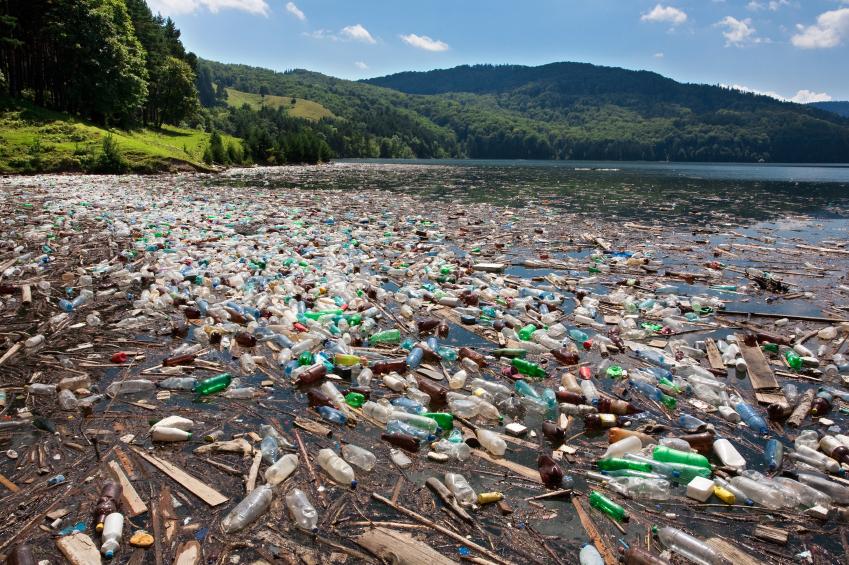 We all may think, why there are still water shortage problems on the earth when most of it is covered by water? The answer to that question is that it’s not as simply as that. That 97% water surface is salty water, which means we cannot consume it unless it goes through the process of desalination (which is really expensive). Only 3% of that 97% is the fresh water used by humans and the whole ecosystem, in fact of that 3% just 25.33% is the water we use. The remaining percentage (74.6%) is either in the atmosphere, in the form of ice or in the soil. The actual problem, is that we, humans, are wasting that 3% of fresh water. All the Industrial waste generated through the years is dumped into rivers, oceans, and other waterways, contaminating at the same time, all other water that is fit to be used. To this we add that as Earth's population continues to grow, and people are putting a lot of pressure on the planet's water resources. In the end, if we don’t start controlling our actions, this will lead to a worldwide water scarcity.
 The availability of water is one of the few things that is not caused by humans nor the society itself, but has to do with the distribution of precipitation. As we all know, on the one side, there are water- rich countries with plentiful fresh water supplies such as Canada, Brazil and Russia. In This countries, lack of water isn't a problem as they have large rivers that flow through them and also they are so huge that as a result they have plenty of territory for the rain to fall (despite the fact that the size of the territory, does not determine the reserve of water of a country since that same country can have a great dry area in which rains very little) And on the other side there are the water- poor countries such as Saudi Arabia, Lybia and Mauritius. In the case of Saudi Arabia and Lybia, this countries are dominated by deserts, so that's where the little amount of rainfall they receive in a year, comes from. In Mauritius, however, that’s not the case. This country, like many other, receives great amounts of precipitation but the problem is that the island is so little that the space where the rain falls is very small.
To conclude it's worth mentioning that it's actually hard to believe in this 21st century, where technology is so advanced, there is not solve yet the problem concerning water shortage in many countries. We constantly see in movies and documentaries how much the lack of water affects day after day to millions of people around the world. Although there has been improvements no solution capable of solving this world problem once and for all, has arisen yet. That people, who walk uncountable miles every day to get some water, are waiting for a miracle to happen, they are waiting for someone who brings them HOPE.
jueves, 1 de junio de 2017
Época Napoleónica
En la clase de Historia, debíamos realizar una presentación acerca de las etapas y lo sucedido en la Época Napoleónica. Trabaje con Juana Bonnemezón en Prezi.
Suscribirse a:
Entradas (Atom)